

Elementary Writing & Grammar
The BJU Press elementary Writing & Grammar program weaves together the many elements needed to understand and communicate clearly in the English language. Writing, grammar, mechanics, listening, speaking, and viewing (visual literacy) all come together to provide students with a solid English language arts foundation so they can enjoy and effectively use God’s gift of language. To achieve this vision, students learn parts of speech sequentially as they master English conventions through spiral review and ample practice. Proofreading activities give students practice in analyzing sentences, identifying grammatical errors, and correcting errors in writing. Students follow the writing process to write in numerous genres and formats including opinion pieces, informational texts, and narratives. Students develop their craft through teacher modeling and student collaboration as they write for real-world contexts.
Elementary English will be renamed to Writing and Grammar to avoid confusion about which components of ELA instruction are included in these products. BJU Press offers separate reading, spelling, and handwriting products.


Vision
To equip students to master foundational grammar and writing skills to craft effective written and oral communication that serves others.
Goals
- To foster an appreciation of language as a gift from God
- To develop a foundational knowledge of English grammar and mechanics
- To develop study and reference skills
- To teach the writing process for narrative, informative, opinion, and expository writing
- To encourage clear and effective writing through mentor text analysis and regular practice of writing in real-world contexts
- To develop technological literacy through publishing
- To guide the development of collaboration, listening, speaking, and viewing skills
- To provide space for reflection on communication that serves others
Program Approach for Writing & Grammar
Appreciating God’s Gift of Language
God gave us language as a gift, one that Christians should appreciate: through language we communicate with one another, develop relationships, describe needs, understand our world, and—most importantly— learn about the God who created this world. Throughout this program students will see language as a gift from our good and gracious God (not as something that evolved on its own). Biblical worldview themes throughout help students understand the connection between mastering the English language and loving and serving others.
Developing English Grammar and Mechanics
Complex languages require detailed study. The BJU Press elementary Writing & Grammar product line systematically teaches English grammar and mechanics, introducing parts of speech and other grammar concepts sequentially and using a spiral review to reinforce learning throughout the elementary years.
Building Study and Reference Skills
Understanding a text requires not only reading fluency but also applying English grammar and mechanics skills to that text. Regular study skills and digital literacy skills features encourage students to learn the basics of research using both print and digital sources.
Implementing the Writing Process
The program teaches the five-part writing process: prewriting, drafting, revising, editing, and publishing. Nearly every writing assignment walks students through each of these five phases, modeling real-world best practices.
Encouraging Clear and Effective Writing
Using mentor text analysis, modeling, and regular writing practice (including writing in real-world contexts) students will grow in their understanding of how to write with clarity and effectiveness in many genres.
Developing Technological Literacy
Every writing chapter ends with a publishing lesson where students are guided in creating a polished final copy of their work and then publishing it. Whether as a formatted printed paper (5th grade expects typed final drafts), an audio recording, or a blog post, these published projects help students develop digital literacy skills, aligning with both state and national standards.
Building 21st-Century Skills
Students are provided with numerous opportunities to build 21st-century skills such as collaboration, listening, speaking, and viewing (visual literacy). Students collaborate frequently in editing, modeling, and completing grammar assignments. Publishing lessons include numerous opportunities for both listening and speaking, and visual analysis activities are included throughout the product line, promoting critical thinking and active engagement.
Serving Others through Communication
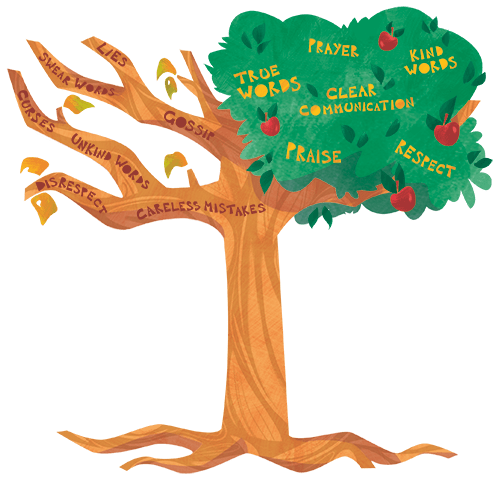
God’s gift of language allows students to serve others through communication that is clear, helpful, and aware of both self and others. Beginning in grade 2, students end each chapter with either a journaling or reflection lesson where they reflect on the skills learned, apply the biblical worldview shaping theme, and track their progress. Optional follow-up class discussions also contribute to building 21st-century skills.
Materials
Student Worktext
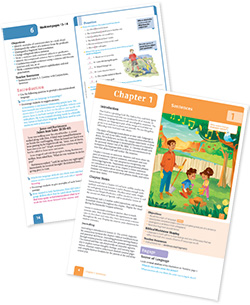
The worktexts teach traditional grammar through teacher and mentor text modeling as well as independent practice. Students learn writing skills across many genres (including opinion, informational, and narrative texts) through the five steps of the writing process, including proofreading activities that improve critical thinking and self-evaluation. Teacher modeling, student collaboration, and mentor texts all inform writing instruction. Chapter reviews and cumulative reviews provide a spiral review of skills. Each worktext also contains a writing handbook with a thesaurus, charts for student reference, and more.
Teacher Edition
The teacher editions present English instruction thoroughly with a careful balance of grammar study and writing practice. These editions provide easy instructions for teaching grammar and writing using the writing process. Suggestions for working with ESL students appear throughout the material. Discussions and activities develop students’ critical thinking and biblical worldview.
Assessments
Assessment packets include age-appropriate and grade-level summative assessments of grammar concepts. Each assessment aligns with the objective stated in the teacher edition. Rubrics for writing assignments are available on Trove and with the Instructional Aids in the teacher edition.
Scope & Sequence
Prewriting Skills
Interpreting pictures, matching sounds with pictures, print awareness
Listening
Listening comprehension: interpreting information, listening for facts and details, following directions
Oral Communication
Singing songs, discussions, action rhymes, pantomimes, recitation, retelling stories, collaboration (Turn and Talk and Think-Pair-Share activities), reading aloud; Dictating a word, a phrase, or a sentence; describing an experience; sharing ideas
Phonemic Awareness and Phonics
Using auditory and visual discrimination as well as letter-sound association for each of the 44 English sounds and their variant spellings; Identifying consonant blends and digraphs, short and long vowel patterns, diphthongs, r-influenced vowels; Recognizing rhyming words; Recognizing hard and soft c, hard and soft g, the silent consonants patterns; Recognizing syllable types; Decoding 130 phonograms or word families; Developing word recognition skills
Vocabulary
Determining meaning from context; Synonyms, antonyms, compound words, contractions, analogies
Structural Analysis
Counting syllables, syllable division; Prefixes, suffixes, suffix rules
Study Skills
Using alphabetical order, following directions; reading a color key
Written Communication
Sentences: Complete thought, completing a sentence, writing words in sentence order, identifying sentence parts (subject part, verb part), writing original sentences; Types of sentences: statements, questions, exclamations; Paragraphs: topic, topic sentence, supporting detail sentences; completing the five-step Writing Process; Genre: informative (facts about a topic, biographical paragraph), personal narrative, poem, letter writing, opinion; Journaling
Grammar, Mechanics, and Usage
Sentence features: beginning uppercase letters, appropriate spacing, end punctuation mark; Capitalization: beginning of a sentence, proper nouns; Punctuation: end of a sentence (period, question mark, exclamation point); commas in a letter and in a series; apostrophe in contractions and possessive nouns; Parts of speech: nouns, pronouns, verbs (action and linking), adjectives, adverbs, and prepositions; Sentences: subject-verb agreement; Past, present, and future tenses
Reading for Comprehension
Reading phrases and sentences with comprehension
Biblical Worldview Shaping
- Order—Using God’s orderly gift of language in orderly ways
- Creativity—Reflecting God’s image with the creative use of language
- Respect—Communicating respectfully to others
- Responsibility—Taking responsibility for using words wisely
Critical Thinking
- Generating ideas
- Brainstorming
- Conferencing with teacher and peer
- Discussion
- Graphic organizers
- Gathering information
- Gathering information from texts
- Graphic organizers: word web, time-order chart, senses chart, and note cards
- Identifying facts and details
- Using the writing process
- Five-step writing process: plan, draft, revise, proofread, and publish
- Shared writing
- Assessment rubric
- Conferencing: teacher and peer
- Presentations: audio recording, in-person presentation
- Developing media and digital literacy
- Analyzing text
- Keyword search
- Internet safety/etiquette
- Digital publishing options
Media & Digital Literacy
Be CyberSmart!
- Can I Keep Secrets on the Internet?
- My Words Matter
- True or Tricky?
- Sharing and Caring
- My Safety: Who Wants to Hurt Me?
Grammar and Syntax
- Facilitating syntactic awareness
- Sentence parts: subject part, predicate part
- Sentence types: statement, question, command, and exclamation
- Sentence fragments
- Subject-verb agreement
- Run-on sentences
- Parts of speech
- Adjectives, including articles, demonstrative adjectives, and comparative and superlative adjectives
- Adverbs
- Nouns: common, proper, singular, plural, collective, and possessive
- Prepositions
- Pronouns
- Verbs: action; linking; helping (has, have); present, past, and future tenses; regular; and certain irregular
- Elaborating sentences
- Combining sentences
- Expanding sentences with adjectives
- Expanding sentences with adverbs
- Forming compound sentences
- Attending to punctuation
- Capitalization: proper nouns, titles, abbreviations, and initials
- Punctuation: period, question mark, exclamation point, comma, and apostrophe
Text Structure
- Writing genre
- Friendly letter
- Instructions
- Opinion
- Personal narrative
- Poetry: couplet, shape poem
- Research report
- Creating paragraphs with structure
- Main idea
- Supporting details
- Reasons
- Linking ideas with time-order words, other transition words
- Ending sentence
- Using indentation
Writing Craft
- Choosing words
- Using a thesaurus
- Synonyms
- Exact verbs
- Word order
- Interesting words
- Attending to the task
- Audience
- Purpose
- Literary devices
- Rhyme
- Sensory words
- Couplet
Study and Research Skills
- Researching skills
- Internet safety/etiquette
- Dictionary skills: alphabetical order, guide word, entry word, definition, and sample sentence
- Genre: fiction, nonfiction, and biography
- Information sources: encyclopedia, dictionary, atlas, and magazines; library catalog
- Using the library
- Keyword search
- Reference skills: parts of a book: title page and contents page
- Studying skills
- Listening: following directions, listening strategies, and identifying facts and details
- Taking notes from text
Parts of Speech
Noun: common, proper, singular, plural, possessive, abstract, collective; Verb: action; linking; helping; present, past, and future tenses; irregular verbs; Pronoun: subject, object, possessive, singular, plural, courtesy order; Adjective; Adverb; Preposition
Sentence Structure
Sentence: fragment, run-on sentence, compound sentence; Sentence parts: complete subject, complete predicate, simple subject, simple predicate; Sentence types: declarative, interrogative, imperative, exclamatory; Diagramming; combining sentences; expanding sentences
Conventions
Capitalization: proper nouns, titles, abbreviations, initials, book titles; Punctuation: period, question mark, exclamation point, comma, apostrophe
Usage
Pronoun reference; contractions; subject-verb agreement
Writing Skills & Support
Shared writing; Independent writing; Paragraph development; Writing process: plan, draft, revise, proofread, publish; Writing traits: ideas, organization, voice, word choice, sentence fluency, conventions, presentation; Writing conference with teacher and peer; Graphic organizers: opinion chart, word web, time-order chart, story map, paragraph model, note cards; Checklist for self-assessment; Rubric for summative assessment; Proofreading marks to improve writing and make corrections; Using a thesaurus
Writing Projects
Informative/explanatory: game instructions, research report; Opinion: book review, persuasive essay; Narrative: friendly letter; Poetry: sound poem; Journal and reflection activities
Study & Research Skills
Reference skills: parts of a book, using the library; Non-print sources: internet, electronic catalog, videos; Study skills: taking notes, internet safety, keyword search
Listening, Speaking & Viewing Skills
Listening skills: collaborative discussions, think-pair-share, active listening stories; Speaking skills: reading orally, presenting reports; Viewing skills: visual analysis, image brainstorm; Presentations: oral report with visual display, audio recording, video recording
Biblical Worldview
Communication in relation to Creation, Fall, Redemption using the themes of friendship, authority, work, celebration, and people
Parts of Speech
Noun: common, proper, singular, plural, possessive, abstract, collective; Verb: action, linking, helping, simple tenses, progressive tenses, irregular verbs, frequently confused verbs; Pronoun: personal pronouns, correcting unclear pronouns, courtesy order, indefinite pronouns, reflexive pronouns, relative pronouns; Adjectives: articles, demonstrative adjectives, proper adjectives, order of adjectives, comparative, superlative; Adverb: comparative, superlative, relative adverbs; Preposition; Conjunction
Sentence Structure
Sentence; fragment; compound sentence; complex sentence; Subjects and predicates: complete, simple, and compound; Phrase, dependent clause, independent clause; Diagramming
Conventions
Capitalization: proper nouns, proper adjectives, titles, abbreviations; Punctuation: period, question mark, exclamation point, comma, apostrophe, quotation marks
Usage
Homophones; Pronoun reference; Contractions; Frequently confused verbs; Double negatives; Subject/verb agreement
Writing Skills & Support
Shared writing; Paragraph development; Writing process: plan, draft, revise, proofread, publish; Writing conference with teacher and peer; Graphic organizers: word web, events/details chart, opinion, chart, plot pyramid, T-chart, timeorder chart, Venn diagram; Proofreading marks; Using a thesaurus; Checklists for self-assessment; Rubrics for summative assessment
Writing Projects
Poetry: acrostic poem; Opinion: book review; Narrative: realistic story, tall tale; Informative: compare-contrast essay, research report
Study & Reference Skills
Reference skills: parts of a book, types of reference books, using the library, using the internet; Study skills: taking notes, outlining, internet safety, keyword search, reliability of sources
Listening & Speaking Skills
Listening skills: collaborative discussion, summarization, peer conferences; Speaking skills: presentations, peer conferences; Viewing skills: visual analysis
Biblical Worldview
Communication in relation to Creation, Fall, Redemption using the themes of Source of Language, Truth, Goodness, and Craft
Parts of Speech
Noun: common, proper, singular, plural, possessive, abstract, collective; Verb: action, linking, helping, simple tenses, progressive tenses, perfect tenses, irregular verbs, frequently confused verbs, mixing verb tenses; Pronoun: subject, object, possessive, reflexive, intensive, indefinite; with antecedent; Adjective: articles, demonstratives, proper adjectives, comparative, superlative; Adverb: comparative, superlative; Preposition; Conjunction: coordinating, correlative, subordinating; Interjection
Sentence Structure
Simple sentence; compound sentence; complex sentence; Sentence patterns; Subjects and predicates: complete, simple, and compound; Phrase, dependent clause, independent clause; Correcting fragments, comma splices, and fused sentences
Conventions
Capitalization: proper nouns, proper adjectives, titles, abbreviations; Punctuation: period, question mark, exclamation point, comma, apostrophe, quotation marks
Usage
Homophones; Pronoun reference; Contractions; Frequently confused verbs; Double negatives; Subject/verb agreement
Writing Skills & Support
Paragraph development; Writing process: plan, draft, revise, proofread, publish; Writing conferences with teacher and peers; Proofreading marks; Using a thesaurus; Checklists for self-assessment; Rubrics for summative assessment
Writing Projects
Poetry: diamante and sense poem; Opinion: book review, persuasive letter; Narrative: personal narrative; Informative: compare-contrast essay, research report
Study & Research Skills
Reference skills: parts of a book, types of reference books, using the library, using the internet; Study skills: taking notes, outlining, internet safety, keyword search, reliability of sources
Listening, Speaking & Viewing Skills
Listening skills: collaborative discussion, peer conferences; Speaking skills: presentations, peer conferences; Viewing skills: visual analysis
Biblical Worldview
Communication in relation to Creation, Fall, Redemption using the themes of Personality, Perception, Precision, and Pleasure